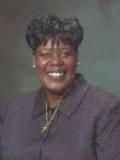
Over the course of her career as a paralegal, one of the changes she has seen in the legal industry has been the United States Patent and Trademark Office's implementation of the electronic filing system (EFS) for patent correspondence and, in particular, the web-based electronic filing system (EFS-Web).
"EFS-Web permits most patent correspondence—that is, most patent applications and other patent-related documents—to be submitted in a portable document file (PDF) format," said Kongtcheu.
Another change she has seen is the online availability of file wrappers and patent law and rules.
"These changes are making our work as paralegals more efficient," said Kongtcheu.
One person who significantly influenced Kongtcheu's career was the senior paralegal who served as her mentor when she joined the firm. "[She] was very demanding," said Kongtcheu. "Her requests increased my curiosity and my knowledge in the field."
Kongtcheu works very long hours—sometimes 55 hours per week. "I have to commute about three hours every day and take care of my family (my five-year-old son and my husband). Therefore, when I'm assigned to a project, I usually try to get my work right the first time," said Kongtcheu.
"I also try to have a time that I could use to make improvements on my career. I'm taking some physics classes to meet the requirements to pass the patent bar examination with the USPTO (United States Patent and Trademark Office). During the weekend, I usually have activities that my family can do all together—gardening, swimming, walking, etc."