On Tuesday, the Appellate Division, First Department, found that the Pension Board had erred in repeatedly denying the disability claims of a retired police lieutenant who, for months, had been required to sift through the debris of the 9/11 site. The decision overturned at least three rejections by a pension medical board that refused to accept that the disability of the police officer was related to working at the World Trade Center site.
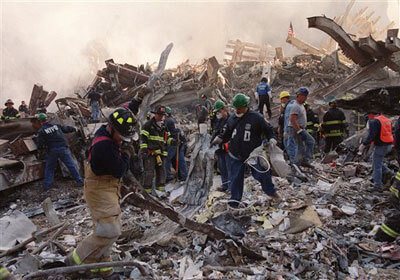
In the instant case, Lieutenant William Dement first worked a 12-hour tour t the World Trade Center on September 14, 2001. After that the debris from the WTC was shifted to Fresh Kills landfill on Staten Island. Dement spent three months on Staten Island sifting through the WTC debris for recovery and investigative work.
In 2002, Dement applied for a disability pension alleging breathing difficulty. His application was rejected. After he retired in ordinary course of events, he applied for accidental disability retirement related to WTC injuries, claiming that he suffered from respiratory and gastrointestinal diseases as a result of his work on WTC debris at Staten Island.
In 2007 and 2008, a medical board of the police department approved ordinary disability but denied accidental disability three times, though agreeing each time that Dement had sleep apnea. The medical board failed to establish the link between the WTC and the suffering of the retired police lieutenant. Dement filed a lawsuit against the police department for the rejection of his application as being arbitrary and capricious.
Writing for the court, Justice Sallie Manzanet-Daniels observed, “Petitioner demonstrated that he was incapacitated for the performance of a service as a proximate result of his WTC line-of-duty toxic exposure injuries … Respondents’ claim that petitioner’s breathing and GI problems had absolutely no effect on his sleep apnea lacks any rational basis whatsoever.”
The court also noted that while sleep apnea does not find mention in the World Trade Center benefits law, sleep apnea is a recognized medical condition under the federal law meant for compensating victims of 9/11 attacks.
Dement also presented evidence of heavy metal poisoning before the court, and in a concurring opinion, Justice David Friedman held that the conditions was sufficient by itself to allow full benefits without going into the question of whether Dement’s sleep apnea was linked to his WTC work or not.
The case is Matter of Dement v. Kelly et al, Appellate Division, First Department, No. 5621.