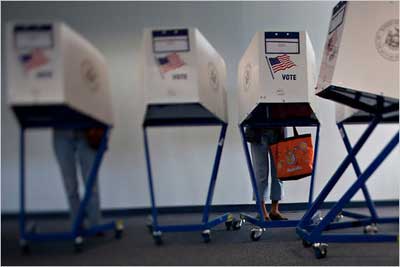
According to the 2005 Election Reform and Modernization Act, or ERMA, every county in the state of New York is required to replace lever voting machines with electronic machines. However, the Nassau County argued that electronic voting machines were unreliable and the implementation of ERMA would lead to the disenfranchisement of voters.
However, the Third Department decided that the problem was not a concern of the county, as it did not have the task of implementing the new technology but it was a duty of the Nassau Board of Elections. Hence, the county had no standing to sue the state over the issue.
In its order dismissing the suit, the Third Department observed, “Inasmuch as the county has neither alleged nor demonstrated that it plays any role in implementing the statute it seeks to challenge, it cannot be said that the county itself will be forced to violate a constitutional proscription if obliged to comply with the statute.”
The ERMA created in response to the 2002 federal Help America Vote Act, has found resistance from several counties, including Nassau, which refused to purchase electronic machines over concerns of security and costs. Nassau started using the optical scanners after a federal court ordered the implementation of ERMA in the county.
The county filed this lawsuit in response to the state court for declaring ERMA unconstitutional as the electronic voting machines led to “disenfranchisement and subversion of the democratic process.” Nassau county officials claimed that the electronic voting machines are subject to tampering and unreliable. The suit was dismissed in 2011, by Albany Supreme Court Justice Michael Lynch. However, the county appealed. Ultimately, the appeal was dismissed by the Third Department on Thursday.
The case is the Matter of Nassau County v. New York State, New York State Supreme Court, Appellate Division, Third Department, Nos. 513425, 513446, 513649.