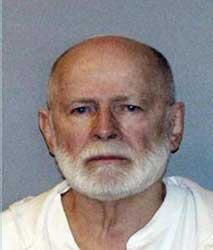
While J.W. Carney, of the Boston law firm Carney & Bassil, representing Bulger, had argued that Bulger had worked out an immunity deal with a former top prosecutor in Boston, and that he intends to argue the point in front of a jury, Stearns refused the request point blank. He said he was personally skeptical of the matter, and would personally rule on the matter rather than allowing it to be argued in front of a jury.
On Thursday, the U.S. Court of Appeals in Boston took the request into consideration and opined that Stearns’ previous history as a federal prosecutor in Boston could create an appearance of partiality in the hearing of the case.
The federal court assigned Judge Denise Casper to hear the case. Casper became a U.S. District Court judge in 2010. Casper has also worked in the U.S. Attorney’s Office in Boston, however, he was not in that office at the time when the events surround the matter happened, or when the case against Bulger was being prepared at that office. Casper worked as the deputy district attorney for Middlesex County, before he became a judge in 2010.
Bulger had been for long on the list of FBI’s “Ten Most Wanted” list, and Martin Scorsese based his 2006 Academy Award-winning film, “The Departed” based on the life and activities of Bulger.
James “Whitey” Bulger is accused of leading the “Winter Hill” crime gang in the 1970s and 80s in Boston, and he is accused of ordering at least 19 murders. He has pleaded not guilty to all charges against him.
Bulger slipped out of Boston in 1994 when a corrupt FBI agent tipped him off about his imminent arrest. From 1994 to 2011, for about 27 years, he successfully avoided capture. He was ultimately arrested from a seaside apartment in Santa Monica, California, where he had been living with his faithful girlfriend who shared his life with him through the years on the run.