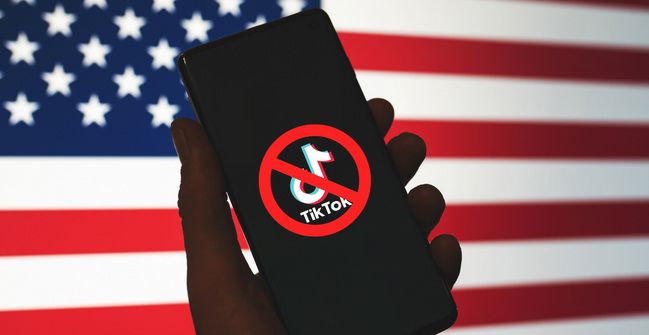
On Wednesday, Montana Governor Greg Gianforte took a significant step by signing legislation prohibiting the Chinese-owned app TikTok from operating in the state. The primary motivation behind this move is to safeguard Montana residents from perceived intelligence-gathering activities by China. This makes Montana the first state in the United States to impose a ban on the widely popular short video app.
Under the new law, Montana will make it illegal for Google and Apple's app stores to offer TikTok within the state. However, no penalties will be imposed on individuals who continue to use the app. The ban is scheduled to go into effect on January 1, 2024, but it will likely face legal challenges. When questioned by Reuters about potential legal action, TikTok, owned by Chinese tech company ByteDance, did not respond.
In response to the ban, TikTok released a statement expressing concerns that the new law "violates the First Amendment rights of the people of Montana by unjustly prohibiting TikTok." The company also pledged to persist in its efforts to protect the rights of its users both inside and outside of WithTok, with its user base of over 150 million AmTikTok Americans, has been facing increasing demands from U.S. lawmakers and state officials to ban the app nationwide. These concerns stem from worry about the potential influence of the Chinese government over the platform.
TikTok has gained immense popularity among teenagers. According to the Pew Research Center, 67% of American teens between the ages of 13 and 17 use TikTok, and 16% of all teens claim to use the app almost constantly. While TikTok has most users above 18 years old, it remains widely embraced by the younger demographic.
Governor Gianforte, a Republican, stated that this bill aligns with the shared objective of protecting Montana residents from surveillance by the Chinese Communist Party.
TikTok has consistently refuted any claims of data sharing with the Chinese government and has emphasized its commitment to not comply with such requests if ever made.
Montana, with its population of slightly over 1 million people, has announced that TikTok could potentially face fines for each violation of the ban, along with the penalties of $10,000 per day for any abuses on the famous short video app that is available for download on Apple Inc (AAPL.O) and Google devices through their respective app stores. If Apple and Google violate the ban, they, too, could face fines of $10,000 per violation per day. At the time of writing, Apple and Google have not provided any comments in response to these developments.
The American Civil Liberties Union (ACLU) strongly criticized the law, deeming it "unconstitutional." They highlighted that the law is set to take effect on January 1, 2024, unless the courts intervene.
Keegan Medrano, policy director at the ACLU of Montana, stated, “With this ban, Governor Gianforte and the Montana legislature have infringed upon the freedom of speech of hundreds of thousands of Montanans who use the app to express themselves, gather information, and run their small businesses, all in the name of anti-Chinese sentiment.”
Former President Donald Trump's attempt to ban new downloads of TikTok and WeChat through a Commerce Department order in 2020 faced multiple legal challenges and was ultimately blocked, rendering it ineffective.
TikTok has found support among advocates of free speech, including several Democratic members of Congress like Representative Alexandria Ocasio-Cortez, as well as First Amendment groups such as the ACLU.
Carl Szabo, the general counsel of industry group NetChoice, also expressed criticism of the new law. He stated, "The government cannot impede our access to constitutionally protected speech, er in a newspaper, on a website, or through an app added that Montana's actions disregard the U.S. Constitution, due process, and free speech principles.
Governor Gianforte had initially sought to expand the ban to include other social media applications that share specific data with foreign adversaries. Additionally, he peruses uses any social media applications on state government-issued devices that collect and transmit personal information or data to foreign adversaries.
Meanwhile, TikTok is working on a project called Projs to establish a separate entity to store American user data within the U.S. on U.S. tech company Oracle (ORCL.N) servers.